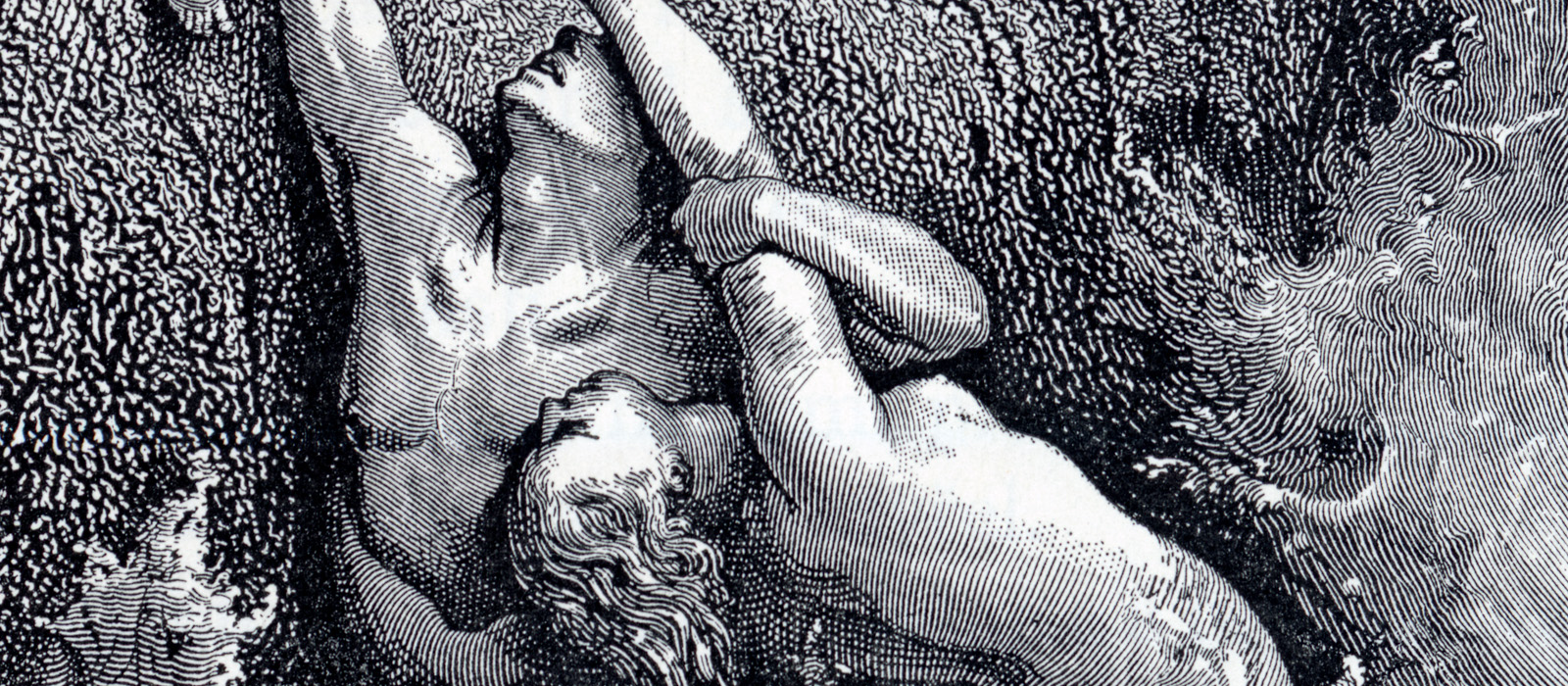
Gustave Doré (1832–1883) was one of those artists who fundamentally changed the way people perceive literature. His name may not be as well-known as the names of the great painters of the 19th century, but his paintings are known to millions of people around the world – even those who have never heard of him. Doré became famous as a tireless illustrator of great literary works. He created thousands of engravings that help readers to imagine Dante Alighieri’s Inferno, the adventures of Don Quixote, and biblical stories to this day.
A genius since childhood
Gustave Doré was born in Strasbourg, France, in 1832. As a child, he amazed those around him with his drawing talent. When he was just 15 years old, he moved to Paris and began working as a cartoonist. Before long, he began illustrating books – with great success. His works were published in luxury editions and the demand for his illustrations grew rapidly.
Illustrator of great stories
Doré’s style was unmistakable. He was able to combine dramatic composition, strong emotions and precise detail. His pictures had the atmosphere of a dream – sometimes beautiful, sometimes dark and tragic. Doré was not just an illustrator; he was a storyteller. Each picture was a separate story. His most famous works include illustrations for:
Dante’s Divine Comedy (1861) – Perhaps his best-known work. Doré managed to transfer to paper the horrors of hell and the mysterious beauty of paradise.
The Bible (1866) – His biblical illustrations are still among the most frequently reproduced.
Don Quixote (1863) – It was Doré who gave visual form to the knight of a sad character, which was taken up by many later artists.
John Milton’s Paradise Lost (1866) – Dramatic depictions of the struggle between good and evil.
Gargantua and Pantagruel (1854) – A grotesque work by François Rabelais perfectly suited Doré’s imagination.
His engravings required enormous patience and technical skill. He worked on many of them at night because – as he himself said – the world of darkness belongs to fantasy.
A master of romantic imagination
Doré was not an academic painter, although he had striven for recognition in painting all his life. However, French art critics considered him more of a “craftsman of illustration”. Paradoxically, he was much more popular abroad – especially in England, where he opened his own gallery in London. His work is characterized by dramatic contrasts of light and shadow, monumental scenes, dynamic movement, fantasy concept.
His illustrations inspired filmmakers, comics and fantasy art of the 20th century. From the Lord of the Rings films to the dark aesthetics of Gothic novels, Doré’s legacy is still evident today.
Ahead of his time
Doré died suddenly in 1883 at the age of just 51. Yet he left behind a monumental body of work: over 10,000 illustrations. It was only later that the art world realized his significance – he became a pioneer of visual storytelling and one of the fathers of modern illustration.